tenderness
SOLO EXHIBITION | BOROWIK FOUNDATION | WARSAW | 22.06.2024–31.08.2024
Curator & Text: Michał Borowik | Photography: Michał Borowik
Installation view. Courtesy of Borowik Foundation
With its distinct scent and raw, natural hue, jute can captivate even those most resistant to sensory experience. Its fine yet resilient fibers carry the memory of a hot, humid climate. Some time ago, my attention was drawn to a massive roll of it leaning against the wall in the Warsaw studio of Grzegorz Pieniak (b. 1994), an alumnus of the Warsaw Academy of Fine Arts. It seemed to demand the artist’s decisive gesture. Its coarse texture resists the force of the painter’s fingers, allowing for perfect tension when stretching the canvas. While cutting jute requires no particular finesse, the material’s pliability offers complete freedom in shaping, folding, and the final, physical act of stapling it to the wooden stretcher. Its loose, translucent weave absorbs light deep into its intricate structure, holding the promise of an artwork that Pieniak has been composing in his dreams for a long time.
[ Continued below ]
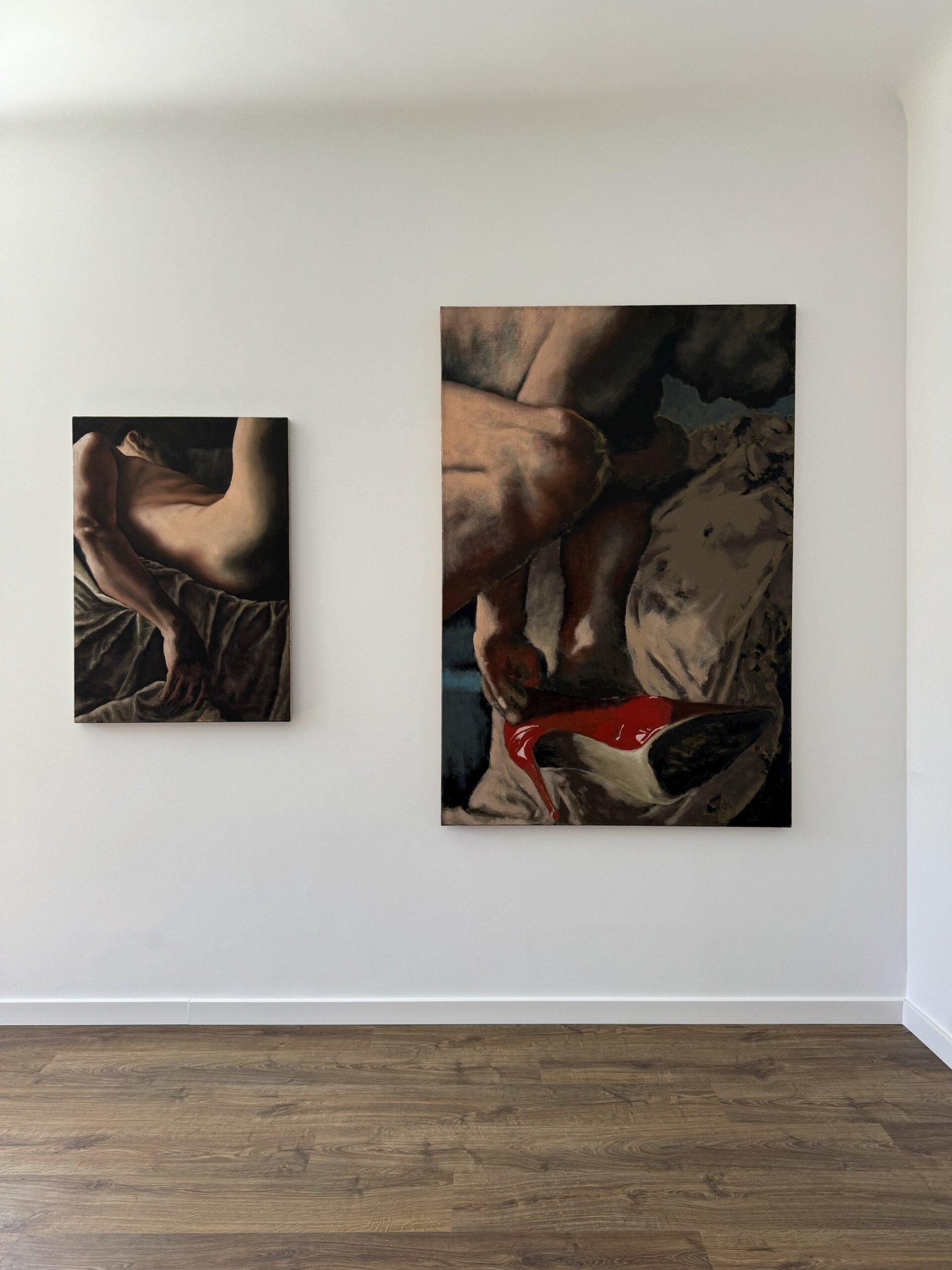
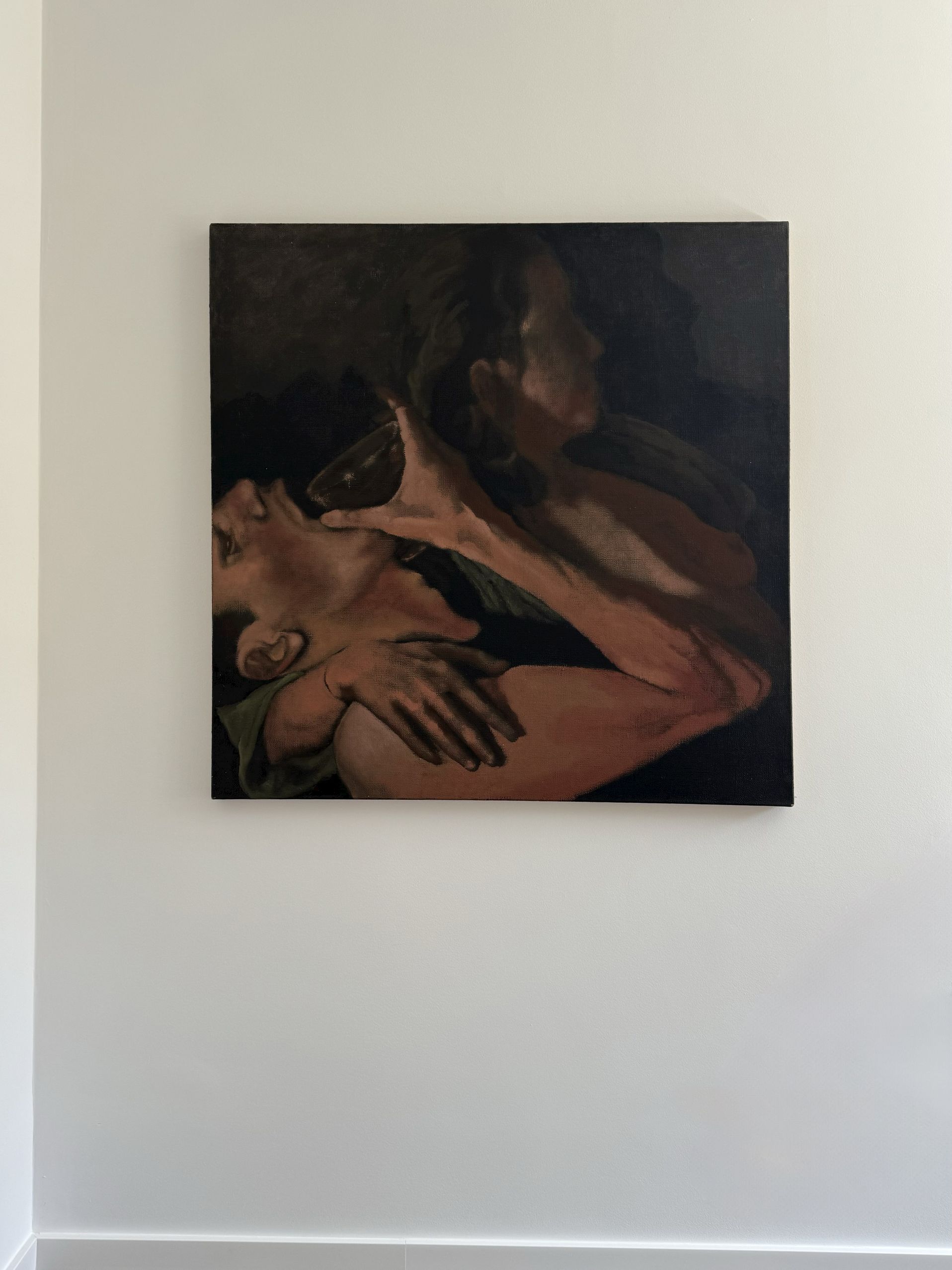
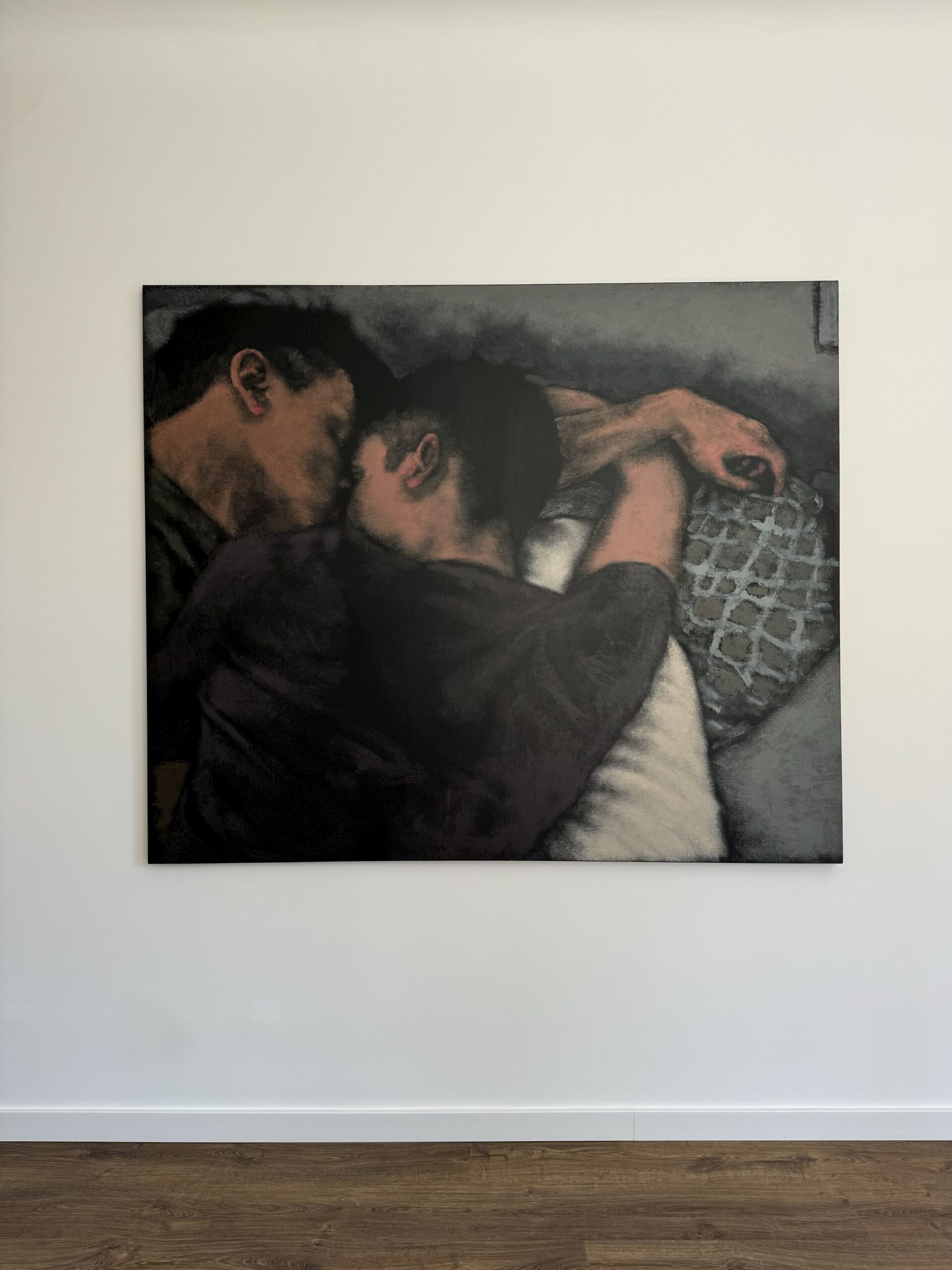
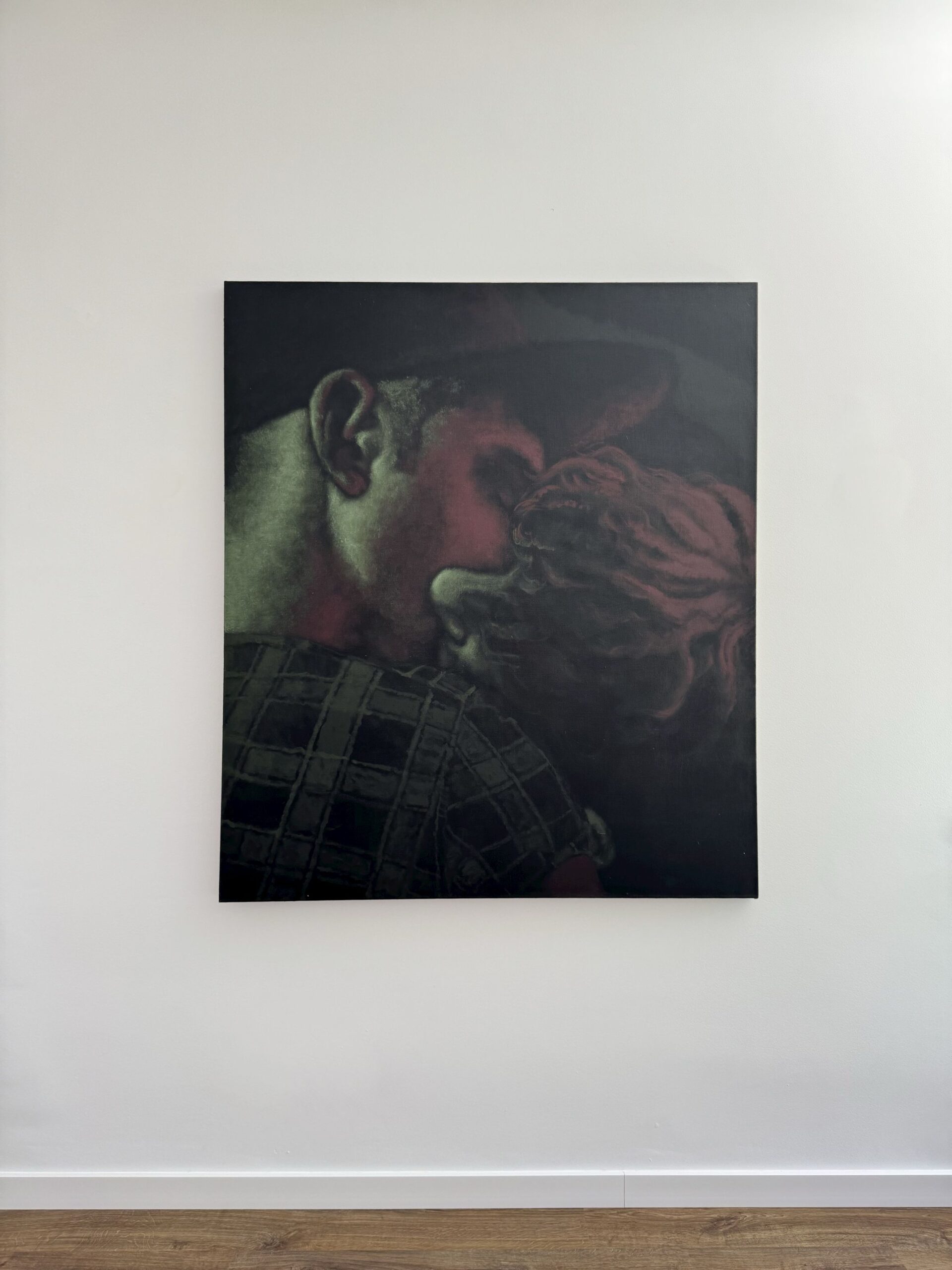
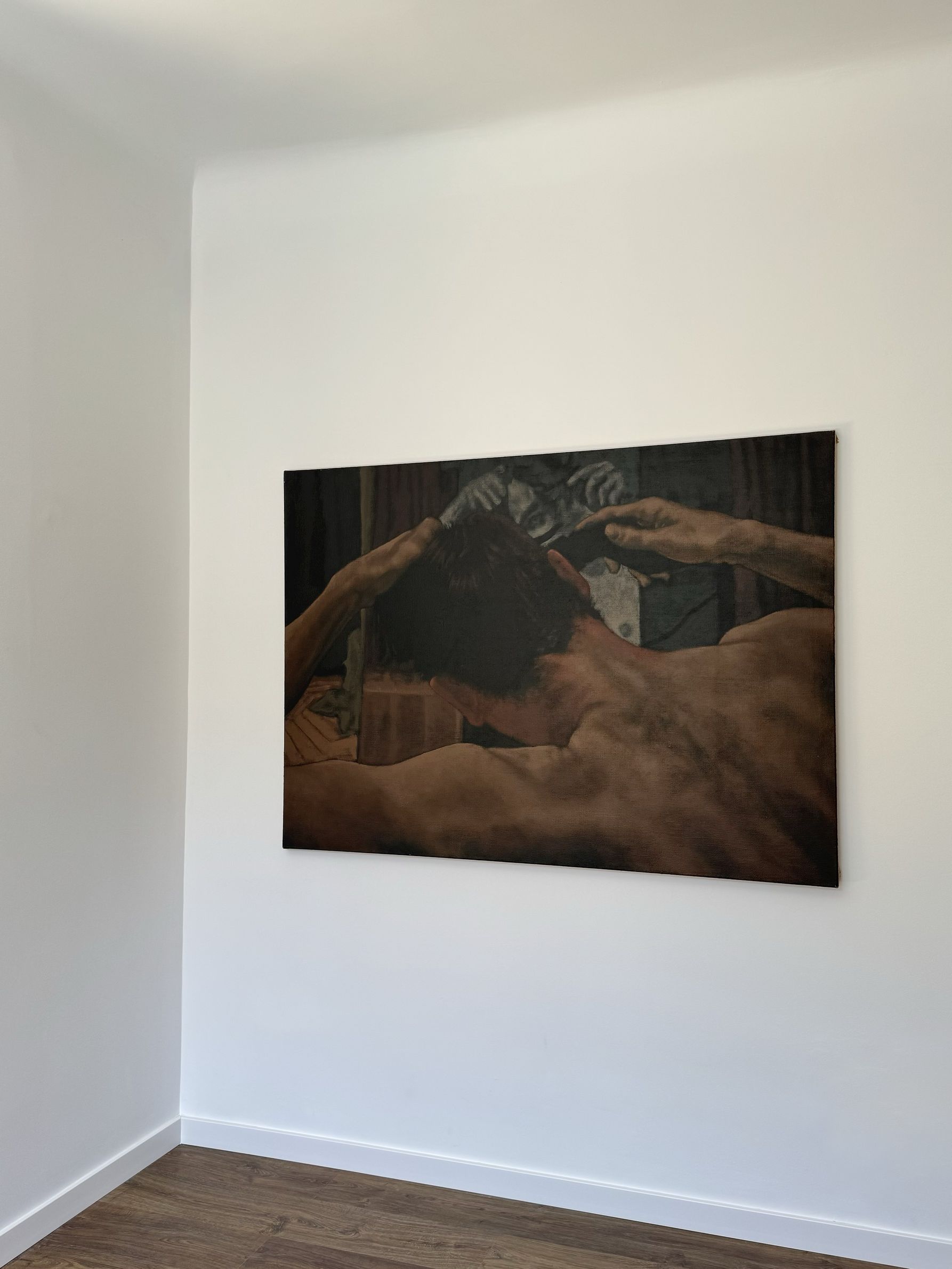
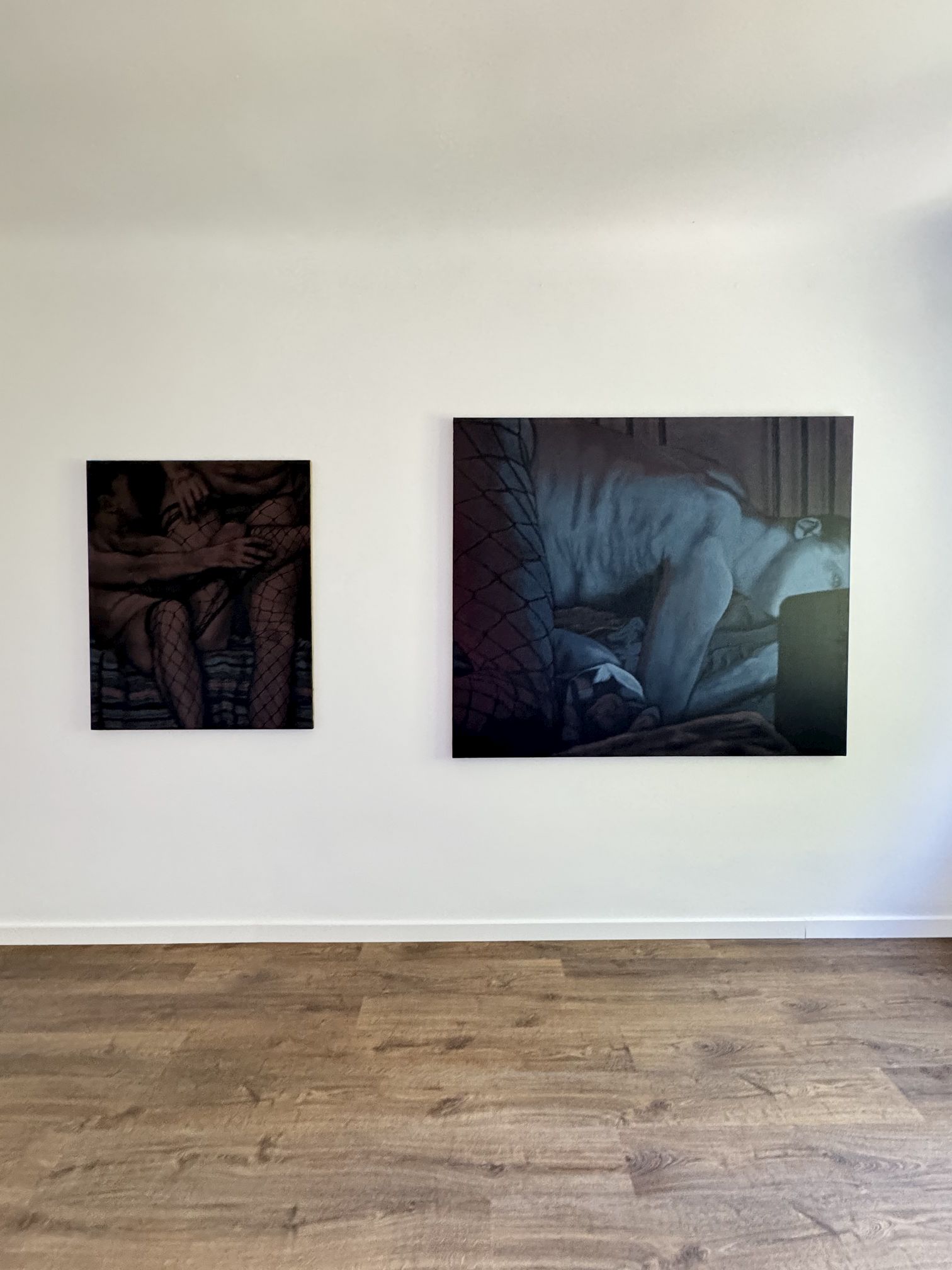
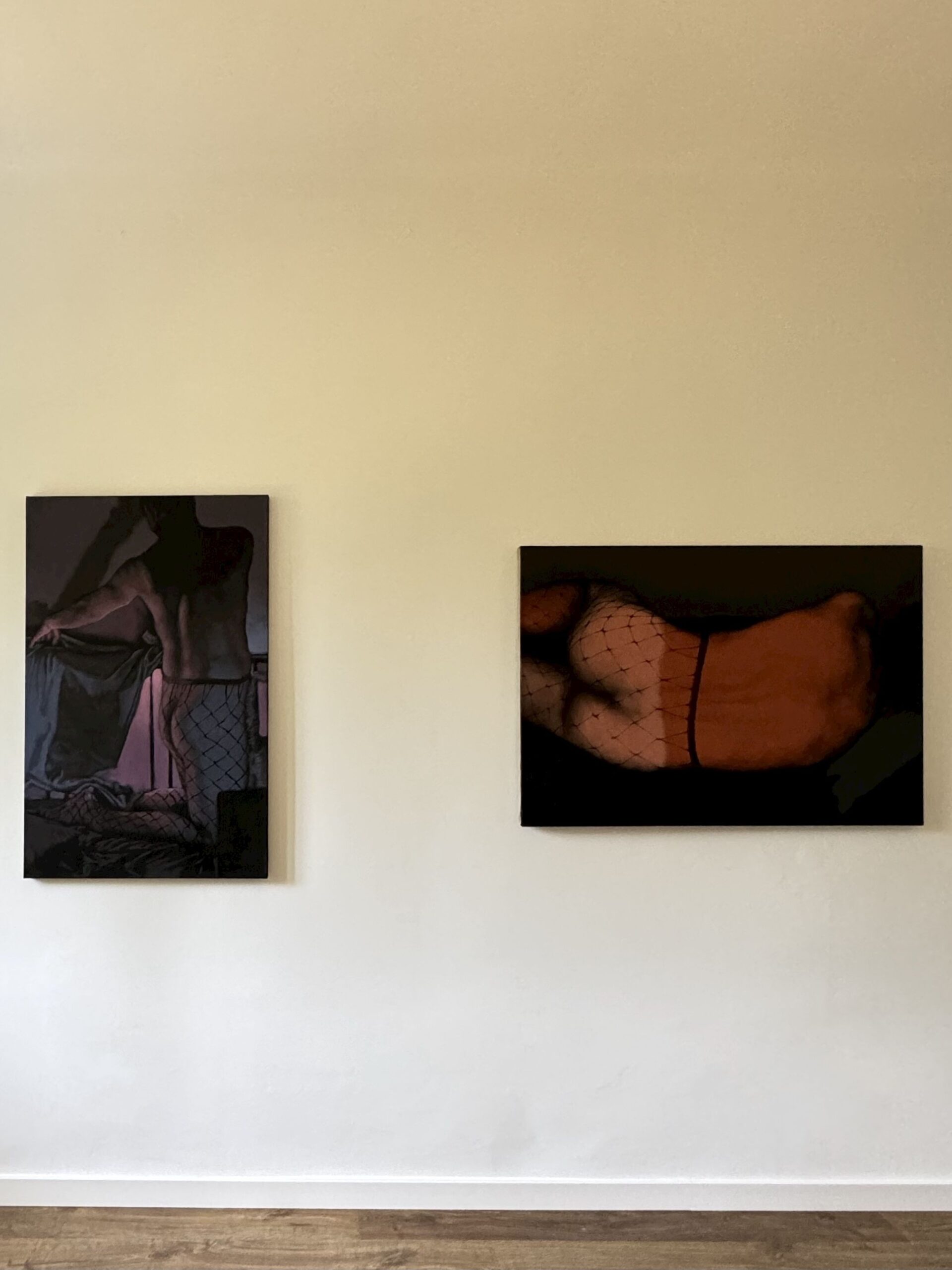
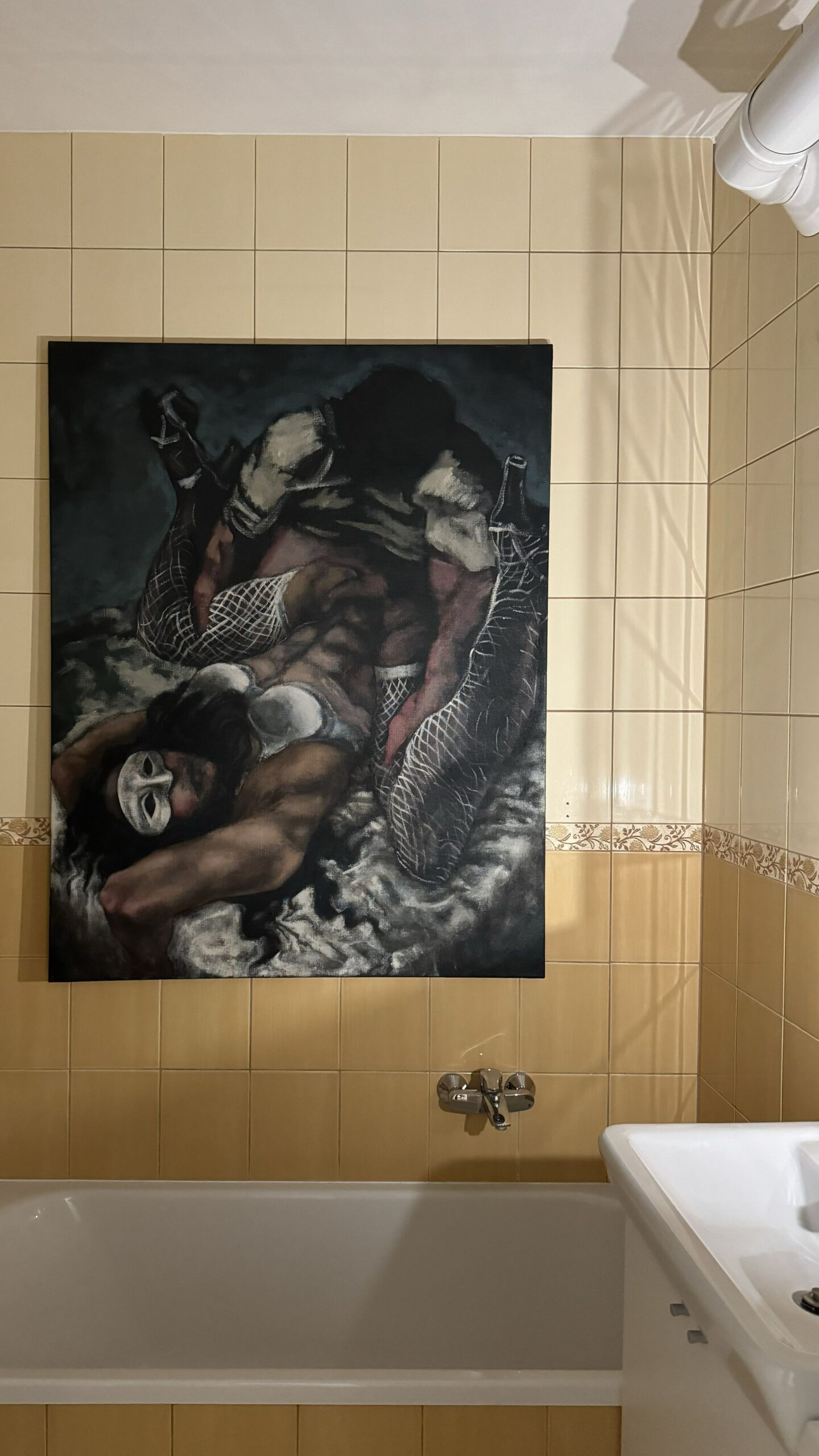
The threshold between dreams and waking reality holds special significance in his practice. It is within these margins that he examines disparities related to identity, race, gender, sexuality, the global mental condition, tenderness, and freedom, attempting to imbue them with new meanings.
Working oil paint into this natural fabric with a brush demands deep focus. The weave can pull pigments in unexpected directions, a process tied to the material’s biological memory of absorbing moisture. Consequently, Pieniak’s paintings generate an optical illusion akin to the grain of an old photograph, evoking a profound sense of the fleeting nature of the moment. A constant throughout this series of paintings is a piercing tenderness, alongside the recurring motif of fabric that delineates the contours of human figures. The dense patterns of jacquard, the decorative folds of starched bedding, and the softness of velour often draw attention away from the bodies themselves—from their physical imperfections, their yearning for intimacy, and a love that reveals itself only when we are truly ready for acceptance.
In Pieniak’s work, tenderness is concealed under the cover of night—tucked away among walls, bed frames, mirrors, textiles, and flowers—out of a deep-seated fear of rejection and lack of acceptance. Regardless of the setting of these individual scenes, deep within them one can always discern another human being. They are accompanied by a profound sense of alienation and loneliness, yet also by a fundamental need for understanding and silence amidst the omnipresent chaos. Silence, ultimately, proves to be the most solitary of experiences, one that is exceedingly difficult to share. Pieniak manages to distill this silence within his intimate portraits, proving that it is the human “aura” that truly evokes emotion and serves as the essential starting point for perceiving the truth.